
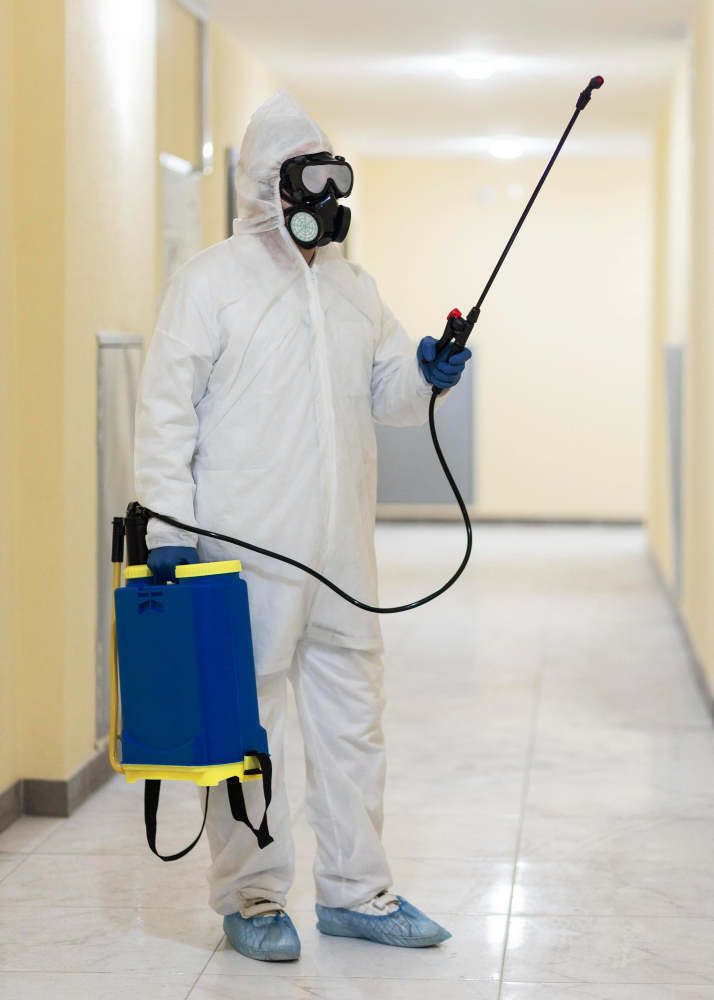

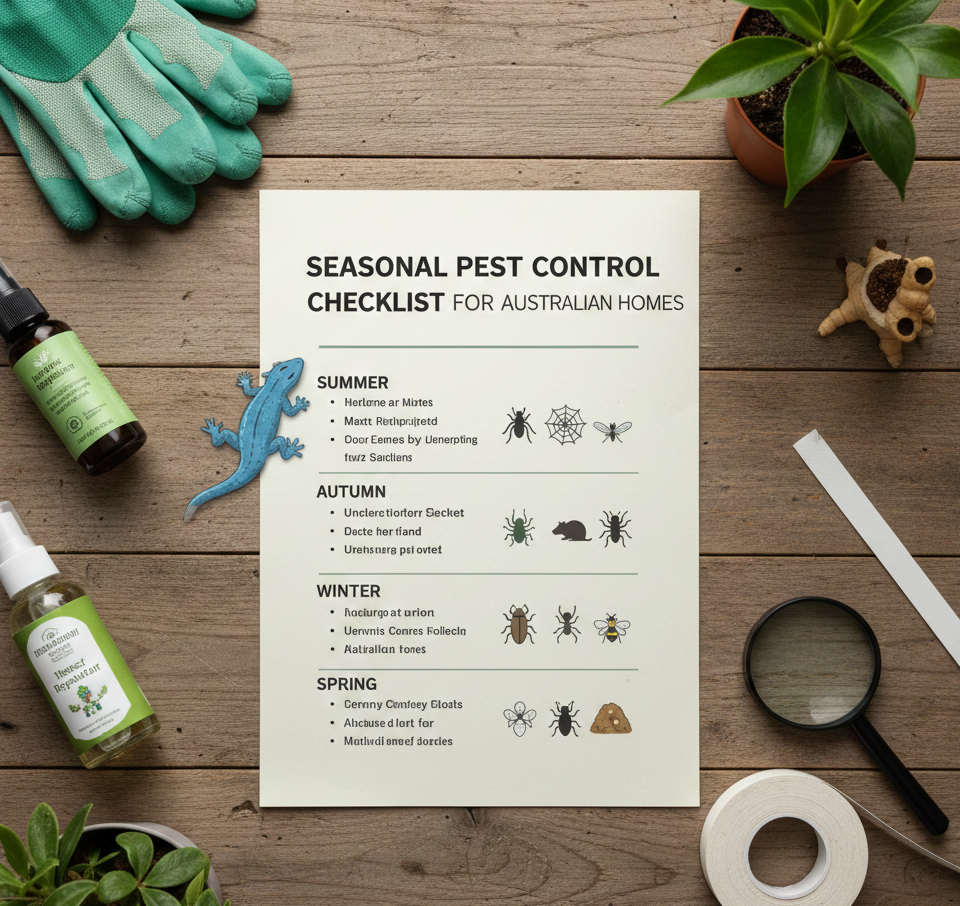
This seasonal pest control checklist offers Australian homeowners a practical, year-round approach to protecting their property from common pests. It breaks down key prevention steps for summer, autumn, winter, and spring, helping reduce the risk of ants, rodents, spiders, cockroaches, termites, and mosquitoes. By understanding how seasonal weather patterns influence pest activity, homeowners can take early action to minimise infestations. The guide covers essential tasks such as regular cleaning, sealing entry points, managing moisture, maintaining gardens, and scheduling professional inspections, making it easier to stay ahead of pests and maintain a healthier home year-round.
Why Seasonal Pest Control Matters in Australia
Australia’s climate changes significantly throughout the year, and pests often adapt faster than people expect. Warm months bring increased insect activity, while cooler months push rodents and cockroaches indoors. Seasonal shifts also affect breeding patterns, movement, moisture levels, and available food sources.
A structured, seasonal approach helps reduce risks before pests enter your home. Regular prevention reduces costs, prevents damage, and lowers health risks, especially for families with children or pets.
Below is a complete seasonal pest control checklist to help you stay prepared right through the year.
Summer Pest Control Checklist (December–February)
Summer is the busiest pest season in Australia. Hot temperatures increase breeding cycles, pushing insects to seek shade, water, and food inside homes.
1. Inspect for ants and cockroaches
These pests thrive in humid summer conditions and enter kitchens seeking crumbs and moisture.
Checklist:
- Wipe benches frequently
- Store food in sealed containers
- Repair leaking taps
- Clean behind appliances
For broader treatment options and prevention plans, refer to Pest Control Services.
2. Reduce mosquito breeding zones
Still water is the main cause of mosquito outbreaks.
Checklist:
- Empty pet bowls outdoors at night
- Clear blocked gutters
- Remove water trays under pots
- Maintain pools correctly
External guides from Better Health Victoria and NSW Health’s pest information provide additional tips on mosquito and summer pest risks .
3. Protect outdoor entertaining areas
Summer BBQs attract flies, wasps, and ants.
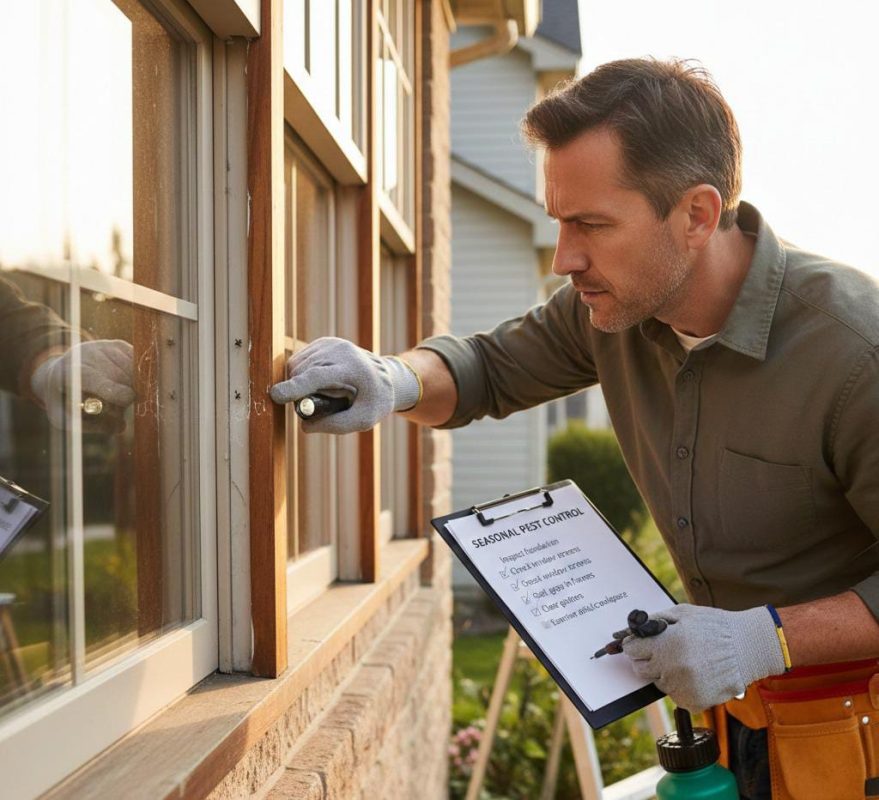
Checklist:
- Keep bins sealed
- Clean BBQ areas
- Use citronella candles outdoors
- Clear food promptly after meals
Autumn Pest Control Checklist (March–May)
As temperatures drop, pests seek warm indoor environments. Autumn is the best time to prepare your home before winter infestations begin.
1. Seal gaps and cracks
Rodents and spiders commonly enter through tiny openings.
Checklist:
- Seal cracks around windows
- Install door sweeps
- Replace torn flyscreens
- Block gaps under sinks
2. Trim gardens before the cold season
Overgrown bushes and debris provide nesting spots for pests that later move indoors.
Checklist:
- Clear fallen leaves
- Trim shrubs away from walls
- Remove old wood piles
- Keep grass short
3. Check your roof void and subfloor
Rodents often enter homes during early autumn.
Checklist:
- Inspect for droppings
- Look for chewed insulation
- Seal entry points
- Store food securely in pantries
For unrelated home technology issues, you can also visit Jason’s TV.
Winter Pest Control Checklist (June–August)
Winter drives pests indoors for warmth. Rodents, silverfish, and cockroaches are especially active inside homes.
1. Secure food storage
Mice and rats are persistent during winter.
Checklist:
- Use airtight containers
- Clean pantry shelves
- Avoid leaving pet food out overnight
2. Improve ventilation
Poor airflow encourages mould and attracts silverfish.
Checklist:
- Use exhaust fans
- Open windows during the day
- Reduce moisture in bathrooms
3. Inspect storage areas
Pests hide in dark, cluttered spaces.
Checklist:
- Organise sheds and garages
- Lift boxes off floor
- Dispose of cardboard piles
Spring Pest Control Checklist (September–November)
Spring marks the beginning of breeding season for insects and termites. This is the ideal time for preventative inspections.
1. Schedule a termite inspection
Spring is peak termite activity.
Checklist:
- Inspect garden beds near walls
- Check timber structures
- Look for mud tunnels
- Keep moisture away from foundations
2. Clean outdoor entertainment zones
Warmer days increase spider and ant movement.
Checklist:
- Remove cobwebs around windows
- Pressure clean patios
- Keep rubbish areas tidy
- Seal pet doors if unused
3. Refresh kitchen hygiene habits
Warmer temperatures encourage rapid pest growth.
Checklist:
- Wash bins weekly
- Clean under the fridge
- Scrub sinks at night
- Fix all leaks
Year-Round Pest Prevention Tips
1. Keep syour home dry
Moisture attracts cockroaches, ants, and termites.
2. Maintain good ventilation
Dry, airy homes experience fewer infestations.
3. Arrange routine pest inspections
A yearly check helps detect hidden pest activity early.
4. Store food safely
Pests are less likely to invade when food is sealed properly.
5. Maintain gardens regularly
Outdoor cleanliness reduces indoor pest movement.
When to Call a Professional Pest Controller
While DIY steps help reduce pest activity, some situations require expert attention, including:
- Sightings of termites
- Recurring cockroach infestations
- Large wasp nests
- Rodent infestations
- Strong odours caused by hidden pests
- Pest activity in the roof or wall cavities
Professionals have access to industry-grade equipment, safe organic treatments, and full inspection techniques to address the root cause—not just the symptoms.
Final Thoughts & Professional Help
Following a seasonal pest control checklist helps Australian homeowners stay ahead of pest problems year-round. Each season brings different risks, so maintaining outdoor hygiene, managing moisture, sealing entry points, and booking annual inspections are key steps to long-term protection. When pests become persistent or hard to control, professional support offers tailored treatment and prevention packages for lasting peace of mind.
For fast, reliable, and safe pest solutions—including inspections, organic treatments, emergency support, and long-term control plans—contact Jason’s Pest Control.
Frequently Asked Questions
1. How often should I get a pest inspection?
Once per year is ideal, especially before spring or summer.
2. What season is worst for pests in Australia?
Summer, due to high humidity and rapid insect breeding cycles.
3. Should I pest-proof my home in winter?
Yes—winter is peak season for rodents and indoor pests.
4. Do organic pest control options work?
Yes, when applied by trained professionals.
5. What if pests return after treatment?
A technician can identify the root cause and apply follow-up treatments.